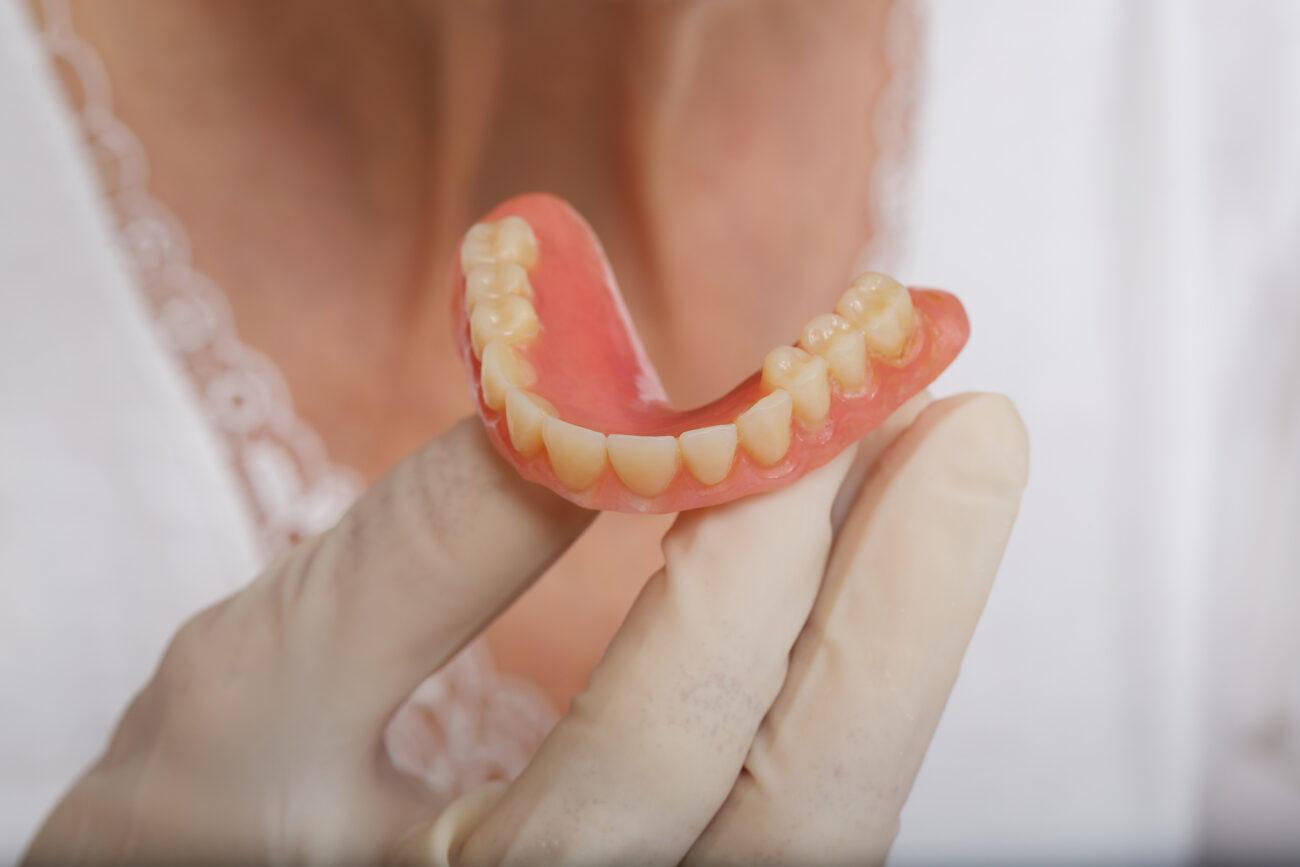
You’ve had your dentures in Philadelphia for a long time. They fit well once, but now they don’t. Maybe they slip and click, and you’ve been using more adhesive than before. Maybe the shape of your lower face has changed in a way you can’t quite explain.
If that sounds familiar, you’re not imagining it. Your dentures haven’t changed. Your mouth has.
The dentures you got ten years ago were made for the mouth you had then. That mouth doesn’t exist anymore. Here’s what changed, and why fixing or replacing older dentures with more modern solutions matters.
What Actually Happens to Your Jawbone
When you lose teeth, the bone that held them in place stops getting the stimulation that keeps it dense. That bone begins to shrink in a process called bone resorption. This isn’t a gradual, decades-long process. It starts within months and accelerates over the first year.
Research on bone loss after tooth loss shows that up to 25% of bone volume in the affected area can be lost within the first year. The process continues over time, but the biggest changes happen early.
A denture rests on the remaining bone ridge. As that ridge shrinks, the denture loses its foundation. The shape it was built to fit is gone.
For patients who’ve worn dentures for a decade, the bone loss can be substantial. The ridge may have flattened and receded, making the denture feel loose no matter how much you adjust it.
What Happens to Your Gums
The gum tissue under a denture is under constant pressure. Over years of wear, that tissue can thin, lose resilience, and become more prone to irritation.
Patients who’ve worn dentures for ten years often develop denture stomatitis, inflammation of the gum tissue under the denture. It can cause redness, swelling, and a burning sensation. It’s treatable, but it doesn’t resolve on its own, and it can make wearing the denture uncomfortable.
This is one reason routine dental visits matter, even for patients with no natural teeth. A dentist examines the gum tissue under a denture and treats any inflammation.
What Happens to Your Bite
Dentures wear down over time. Denture teeth aren’t as hard as natural teeth, and they flatten with use. As they wear, the way your upper and lower dentures meet changes.
For some patients, this changes the bite and can lead to jaw pain, headaches, or a feeling that the dentures no longer close properly. For others, it changes the appearance of the lower face, making it look slightly sunken or asymmetrical. A worn denture is a cosmetic AND functional issue.
What Happens to Your Face
This is the part patients notice most. As the jawbone shrinks and the denture loses its support, the lower face can change.
The distance between the nose and the chin can shorten. The lips can thin. Deep lines can form around the mouth. The chin can appear to jut forward. The overall effect can make a person look older than they are. This is described as facial collapse, and it’s a direct result of untreated bone loss and worn dentures. It’s not inevitable, but it is treatable.
Why Your Dentures Don’t Fit Anymore
Put it all together, and the answer is obvious. The denture was made for a mouth that has changed shape, lost bone, and developed gum irritation. It doesn’t fit because the surface it was built for no longer exists.
This isn’t your fault. It’s a biological reality. Dentures have a lifespan. They’re not a permanent solution like implants. They need replacement, and your mouth needs to be evaluated before a dentist makes a new set.
When to Replace Your Dentures
Dentists typically recommend replacing dentures every five to seven years, though some patients can go longer with good care. But the number matters less than the signs.
You should consider a replacement if:
- Your dentures slip or move when you eat or speak
- You’re using more adhesive than you used to
- You have sore spots that don’t heal
- The dentures look worn, or the teeth are flattened
- Your bite feels different
- Your face has changed shape
- You’ve had gum irritation or inflammation under the denture
- You’ve had the dentures for more than seven years
If any of those apply, it’s time for an evaluation.
What a Prosthodontist Does Differently
Here’s the part that matters. A new denture isn’t just a replacement appliance. It’s an opportunity to re-evaluate your oral health and plan for the long term.
Dr. David Weinstock is a board-certified prosthodontist in Bala Cynwyd, PA. Prosthodontics is an ADA-recognized specialty that requires three additional years of training beyond dental school. He also completed a three-year perioprosthesis program at the University of Pennsylvania, combining periodontics (gum and bone health) with prosthodontics.
That combination matters for a patient who’s had dentures for ten years. He’s evaluating the bone, gum tissue, and how the whole mouth functions. He’s planning for the next decade, not just the next denture.
Dr. Weinstock has been a Clinical Professor at the University of Pennsylvania School of Dental Medicine since 1990, supervising dental students and teaching the next generation of dentists. He’s been named a Philadelphia Magazine “Top Dentist” for the last ten years.
The Options for a Replacement
When you come in for a denture evaluation, the conversation isn’t just “let’s make a new one.” It’s a broader conversation about what’s possible.
A new conventional denture may be the right answer if your bone and gums are healthy and you’re comfortable with the traditional approach. It’s the least involved option.
An implant-retained overdenture may be a better option if your lower denture floats or you’re tired of adhesives. Implants anchor the denture so it doesn’t shift.
A fixed implant-supported prosthesis may be the best answer if you have significant bone loss or want the most stable result. It’s a bigger investment, but it can last decades.
A phased plan may be the right answer if you’re not ready for the full investment yet. Dr. Weinstock’s “one patient, one plan, one place” philosophy means the plan is built around your actual situation, not a generic protocol.
The Emotional Side of Replacing Dentures
This isn’t just a clinical conversation. Many patients are emotionally attached to their dentures, even when they’re causing problems. They remember the day they got them. They remember how it felt to smile again. They’ve adapted to them over the years.
Replacing them can feel like admitting the first ones didn’t work, or like a step backward. It’s not because it’s an upgrade. It’s a chance to address changes in your mouth and get a result that fits who you are now, not who you were ten years ago.
What to Do Next
If you’ve had your dentures for ten years and something feels off, the next step is an evaluation. Not a sales pitch. A real assessment of your bone, your gums, and your options.
Dr. Weinstock’s office is at 15 Presidential Blvd, Suite 201, in Bala Cynwyd, PA. That’s a short drive from Philadelphia, the Main Line, and communities throughout the area. New patients can call (215) 857-8054 or request an appointment online.