
Bleeding gums are not normal. Bleeding gums are commonly a symptom of gum disease. This infection starts in the gums and, if left untreated, can enter the bloodstream.
If your gums bleed when brushing or flossing, it is important to have your dentist look at them. Contact Dr. David Weinstock at his dentist’s office in Philadelphia, PA, as soon as possible.
The Importance of Gum Health
Healthy gums are very important for maintaining a healthy smile. They help keep teeth stable and in proper alignment. They are the structure that holds teeth in place.
Gums that have an infection can recede and pull away from teeth, leading to tooth decay, tooth loss, and even tooth shifting. The main cause of gum recession is gum disease.
Patients with advanced stages of gum disease are also at a higher risk of developing other diseases. Inflammation, cardiovascular disease, and diabetes are all linked to gum disease. The disease progresses very quickly and can cause permanent damage if left untreated.
The progression of periodontal disease is the major cause of tooth loss in adults. It is an inflammatory disease that destroys the tooth-supporting bone. The cause of gum inflammation is mainly due to the buildup of bacterial plaque below the gum line. Gum disease can be painful and cause chronic halitosis.
If you do not have a dentist remove it, bacteria and toxins cause the gums to become inflamed and sore. The tooth-supporting bone responds to this inflammation by simply melting away. Left untreated, the resulting bone loss will leave gum pockets around the affected teeth.
These pockets will hold still more plaque, bacteria, and tartar in an area the patient cannot reach with a toothbrush or floss. Periodontal disease is often painless in its early and moderate stages. However, it is a progressive disease that will get worse without treatment.
Risk Factors Of Periodontal Disease
- Lifestyle and dietary habits
- Tobacco use
- Genetics
- Medical conditions
- Certain medications
- Pregnancy
Stages of Gum Disease
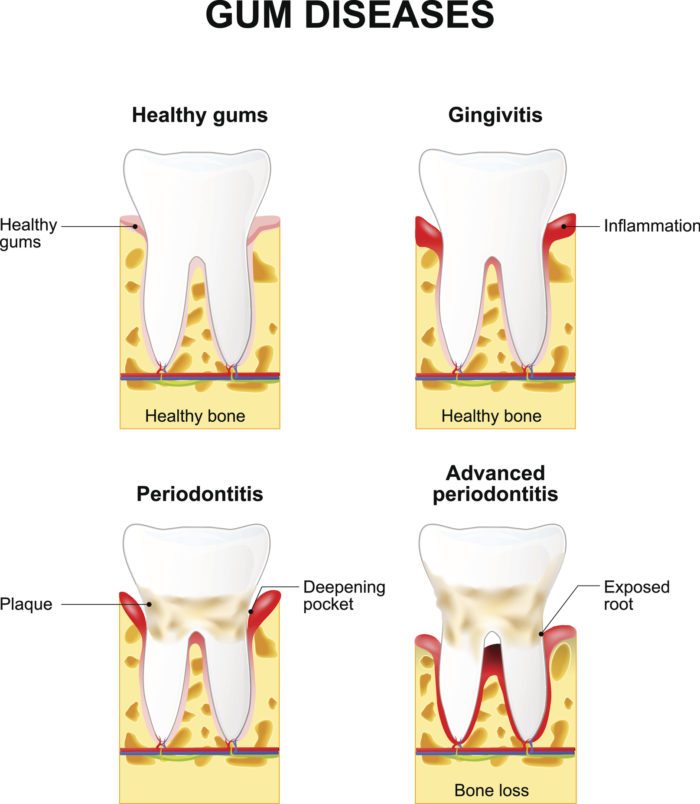
Gum disease is a progressive condition. There are three main phases of the disease. We suggest that your dentist treat your gum disease as soon as possible. Continue reading to learn more about the stages of gum disease.
- Gingivitis: Gingivitis is the earliest stage of gum disease. Patients may notice bleeding, swelling, or tenderness in the gums during this stage. When diagnosed with gingivitis, a deep cleaning may be all they need to heal their gums. Early treatment is important because the infection is reversible if caught early.
- Periodontitis: As plaque forms around the tooth, deep pockets develop in the gums where bacteria will breed. This may cause teeth to become loose, and gum recession may form. At this point, damage is irreversible; however, treatment is important to prevent the disease from progressing.
- Advanced Periodontitis: If left untreated, periodontitis will begin to cause the gum line to recede. It can also begin to deteriorate the surrounding bone structure. Without substantial bone structure, teeth may shift or fall out, and the jawline may begin to recede. Once patients reach the final stage of periodontitis, they risk potential tooth loss.
You should treat gum disease at every stage. However, the earlier we start, the more we can prevent permanent damage. Regular cleanings and check-ups help identify problems early, so we can treat them before they worsen.
Patient Review
Treatment for Bleeding Gums
To stop bleeding gums, Dr. Weinstock must address the cause of the problem. Our Philadelphia, PA dentist office provides scaling and root planing to treat periodontal disease. Scaling and root planing cleanse the gums and teeth of infection so that they can properly heal.
Dr. Weinstock will polish the tooth surface and thoroughly clean the roots and surrounding tissues. This treatment will establish the healthy environment necessary for healing. Often, scaling and root planing are enough to bring a patient’s gums back to full health.
However, in more advanced cases, additional treatments may be necessary to eliminate periodontal pockets through surgical intervention. For your comfort, we will use a local anesthetic during the procedure.
If you have any questions about scaling and root planning, please ask the doctor or hygienist. Our staff is always happy to answer them.
Bleeding Gums FAQs
Do you have further questions about bleeding gums and how they may affect your smile? Continue reading to find answers to frequently asked questions in our office.
What causes bleeding gums?
There are many causes of bleeding gums, including plaque buildup, heart disease, diabetes, brushing too hard, and gingivitis. It can also signify a vitamin deficiency. Typically, this is a sign of a vitamin C and vitamin K deficiency. Another cause of bleeding gums in women may be pregnancy or hormonal changes.
Can a nutrient deficiency cause bleeding gums?
Vitamin deficiency can cause bleeding or sensitive gums. Having low levels of vitamin c is the main vitamin that contributes to this. Vitamin K also contributes to gum bleeding. Taking external supplements of these or eating foods high in vitamins may help if you are experiencing bleeding gums.
What can it mean if my gums are bleeding?
Bleeding gums are often a direct result of built-up plaque. Plaque is full of germs and unhealthy bacteria that attack the healthy soft tissue in the gums.
When the gums have plaque, the bacteria attack them, causing inflammation. This is what leads to bleeding. Bleeding is especially common when brushing and flossing.
Is it okay for my gums to bleed while flossing?
No, if your gums are bleeding while you are flossing, then you are not properly caring for your oral health. The cause of bleeding gums while flossing or brushing is plaque buildup around the gums. This is from not taking care of your teeth and gums. If your gums are bleeding, they are defending themselves from outside germs.
Can bleeding gums lead to tooth loss?
Bleeding gums alone don’t directly cause tooth loss. However, they can be an early sign of gum disease that, if left untreated, may eventually lead to tooth loss. Proper oral hygiene and early intervention are key to preventing this progression.
What is the best toothpaste for bleeding gums?
For bleeding gums, we recommend toothpaste containing stannous fluoride. Popular options include Parodontax Toothpaste for Bleeding Gums and Crest Pro-Health Advanced Gum Restore. These toothpastes reduce plaque, improve gum health, and prevent bleeding.
Can smoking or vaping cause my gums to bleed?
Yes, smoking or vaping can lead to bleeding gums. Harmful chemicals in tobacco and vaping products can irritate and inflame your gum tissue. When your gums become sore and infected like this, it leads to gingivitis.
This inflammation can cause your gums to bleed easily, especially when brushing or flossing. Quitting smoking or vaping can improve your gum health and reduce the risk of bleeding and other oral health issues.
Will I need scaling and root planing if my gums are bleeding?
If your gums are bleeding, it could be a sign of gum disease. Scaling and root planing might be necessary since it is a common treatment for periodontal disease. This dental procedure is a deep cleaning method that helps remove plaque and tartar buildup below the gum line.
Scaling and root planing removes bacteria and smooths the roots of your teeth. This treats gum disease, prevents future damage, and stops your gums from bleeding.
Schedule a Dental Exam with our Dentist in Philadelphia, PA
Dr. Weinstock provides state-of-the-art periodontal therapy to patients in the Philadelphia, PA, region. If your gums are bleeding or swollen, or you notice any changes in the fit of your bite or oral appliance, contact our Philadelphia, PA dentist office or schedule a consultation online.